
Awning vs Canopy – Which Shade Solution Is Right for You?
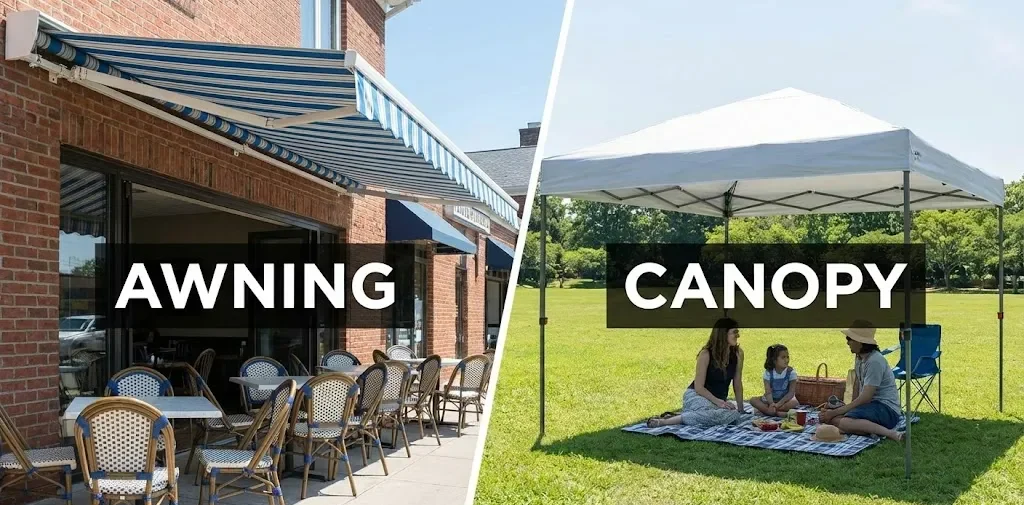
When it comes to enhancing your outdoor spaces, choosing the right shade solution can make a big difference. Two of the most popular options are awnings and canopies, each offering unique benefits and design possibilities. If you’re trying to decide between an awning vs canopy, it’s important to understand the differences, functionality, and aesthetic impact of each so you can make the best choice for your home or business.
What Is an Awning?
An awning is a secondary covering attached to the exterior wall of a building, typically made from fabric or metal. Awnings can extend over windows, doors, or patios to provide shade and protection from the sun and light rain. One key advantage of an awning is its flexibility; many modern awnings are retractable, allowing you to adjust coverage based on weather conditions or sunlight.
Awnings are also highly customizable in terms of color, pattern, and size, making them an ideal solution for homeowners who want to add both functionality and style. When considering awning vs canopy, the permanent attachment of an awning offers a more integrated look and can improve energy efficiency by reducing heat gain through windows.
What Is a Canopy?
A canopy is a freestanding structure that provides overhead coverage and shelter from the elements. Unlike awnings, canopies are not typically attached to a building, giving them the advantage of portability. Canopies are often used for outdoor events, garden areas, or temporary setups and can be made from a variety of materials such as fabric, metal, or even polycarbonate panels.
In the debate of awning vs canopy, canopies offer versatility and ease of installation. They are perfect for spaces where a fixed attachment isn’t practical, and many models include adjustable frames or collapsible designs, allowing you to move or store them when not in use. Canopies also come in different styles, including pagoda shapes, dome tops, and straight-sided designs, offering aesthetic options for every outdoor setting.
Key Differences Between Awnings and Canopies
When comparing awning vs canopy, several differences stand out:
- Attachment: Awnings are mounted to a structure, while canopies are freestanding.
- Flexibility: Retractable awnings allow for shade adjustments, whereas canopies are often portable but require manual setup.
- Durability: Awnings tend to be more permanent and can withstand long-term exposure, while canopies may require more frequent maintenance.
- Use Case: Awnings are ideal for windows, doors, or patios, providing a permanent aesthetic addition. Canopies excel in temporary or versatile settings such as outdoor events or movable shade solutions.
- Cost: Depending on materials and installation, awnings may have a higher initial cost but offer longevity, while canopies can be more budget-friendly and flexible.
Understanding these differences is crucial when deciding between awning vs canopy for your property.
Benefits of Choosing an Awning
Choosing an awning provides several advantages:
- Sun Protection: Awnings reduce direct sunlight, keeping your indoor spaces cooler and protecting furniture from UV damage.
- Energy Efficiency: By blocking sunlight, awnings can help lower air conditioning costs.
- Custom Design: You can match your awning to your home’s exterior colors and style for a cohesive look.
- Year-Round Use: Many awnings are made with durable materials that can withstand sun, rain, and wind.
If your priority is a long-lasting shade solution that integrates seamlessly with your building, awnings are often the better choice in the awning vs canopy debate.
Benefits of Choosing a Canopy
Canopies also have unique advantages that make them appealing:
- Portability: Canopies can be moved or relocated, providing shade wherever needed.
- Versatility: Ideal for temporary events, outdoor parties, or seasonal setups.
- Variety of Styles: Canopies come in many shapes, sizes, and materials, giving you creative freedom.
- Quick Setup: Many modern canopies are easy to assemble and disassemble, making them practical for frequent use.
For homeowners or businesses that require flexibility and mobility, canopies are a practical solution when weighing awning vs canopy.
Material Considerations
Both awnings and canopies can be constructed from fabric, metal, or polycarbonate materials. When evaluating awning vs canopy, consider the following:
- Fabric: Lightweight, customizable, and ideal for retractable awnings or portable canopies.
- Metal: Durable and low maintenance, suitable for fixed awnings and long-term canopies.
- Polycarbonate: Weather-resistant and translucent, offering both sun protection and light transmission.
Choosing the right material depends on whether you value durability, mobility, or aesthetics more.
Maintenance Tips
Maintaining your shade solution ensures longevity and performance. For awnings, regular cleaning and inspecting for wear or tear is important, especially if the awning is retractable. Canopies may require periodic tightening of frames and cleaning fabric to prevent mold or mildew buildup. Understanding these needs can help guide your decision when comparing awning vs canopy.
Conclusion
Choosing between an awning vs canopy comes down to your specific needs, style preferences, and the intended use of your outdoor space. Awnings provide a permanent, energy-efficient, and stylish solution that integrates seamlessly with a building, while canopies offer portability, versatility, and easy setup for temporary or movable shade. By considering factors such as attachment, durability, flexibility, and material options, you can confidently select the shade solution that will enhance your outdoor living experience while providing protection and comfort. Whether you prioritize long-term functionality with an awning or need a flexible, portable option with a canopy, understanding the differences between awning vs canopy ensures that your investment meets both practical and aesthetic goals.